Electric Vehicle Tax Credits and Incentives in 2026 What EV Buyers Need to Know
Electric Vehicles
|
May 5, 2026
As electric vehicles (EVs) gain popularity, comprehending the tax deductions and credits available in 2026 becomes vital for prospective buyers. These incentives can substantially reduce the overall cost of acquiring an EV, stemming from both federal and state regulations. Given the intricate nature of tax policies, both consumers and businesses must understand the differences between these financial incentives to optimize their savings effectively. It is crucial to consult with tax professionals and verify details specific to your jurisdiction, as these regulations may vary and are subject to change. Staying informed will empower you to maximize available tax benefits while navigating the evolving landscape of electric vehicle ownership.
Tax Credit vs. Tax Deduction
Tax credits and tax deductions are critical concepts in tax law that significantly influence a taxpayer's overall financial liability. A tax credit reduces the tax owed dollar-for-dollar. For instance, if your tax responsibility is $2,000 and you qualify for a $1,000 tax credit, your final tax bill decreases to $1,000. In contrast, a tax deduction lowers the amount of taxable income, which reduces your owed taxes indirectly. For example, if your taxable income is $50,000 and you secure a $1,000 deduction, your new taxable amount would be $49,000, subsequently lowering your tax owed based on your tax bracket percentage.
Grasping these differences is crucial for those considering the purchase of an electric vehicle (EV). With numerous incentives available, understanding whether you qualify for a tax credit or deduction can significantly enhance your benefits. Notably, EV buyers may be eligible for a direct tax credit on their vehicle purchase, which can lead to considerable reductions in overall tax obligations. By educating themselves on these distinctions, consumers can make informed choices regarding their investments in electric vehicles in 2026 and beyond.
Status of Federal Clean Vehicle Purchase Credits
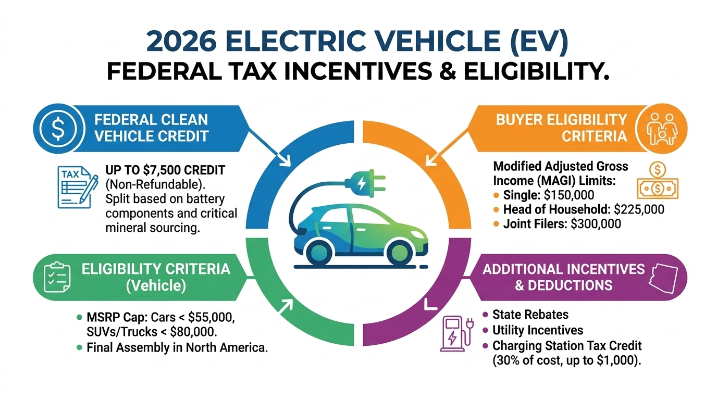
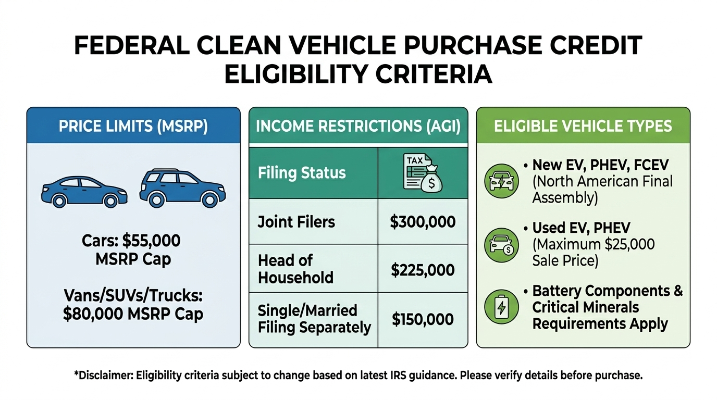
The federal clean vehicle purchase credits serve as essential incentives for consumers aiming to buy electric vehicles (EVs). These credits apply to both new and used electric vehicles purchased before September 30, 2025. To qualify, vehicles must meet crucial eligibility criteria, including price limits; for example, new vehicles cannot surpass a price cap of $80,000, while used vehicles have a maximum limit of $25,000. Additionally, there are income restrictions determining eligibility. For instance, single filers must maintain an adjusted gross income (AGI) below $150,000, whereas joint filers have a threshold of $300,000.
Eligible vehicle types include new EVs, used EVs, and particular commercial clean vehicles. It is paramount to note that transitional rules are in place regarding the tax credits, facilitating a gradual rollout of this program. Future purchases after September 2025 will be governed by newly established guidelines yet to be specified, highlighting the importance of staying informed for prospective buyers to ensure qualification for the available tax benefits.
Business-Use EV Expense and Depreciation Overview
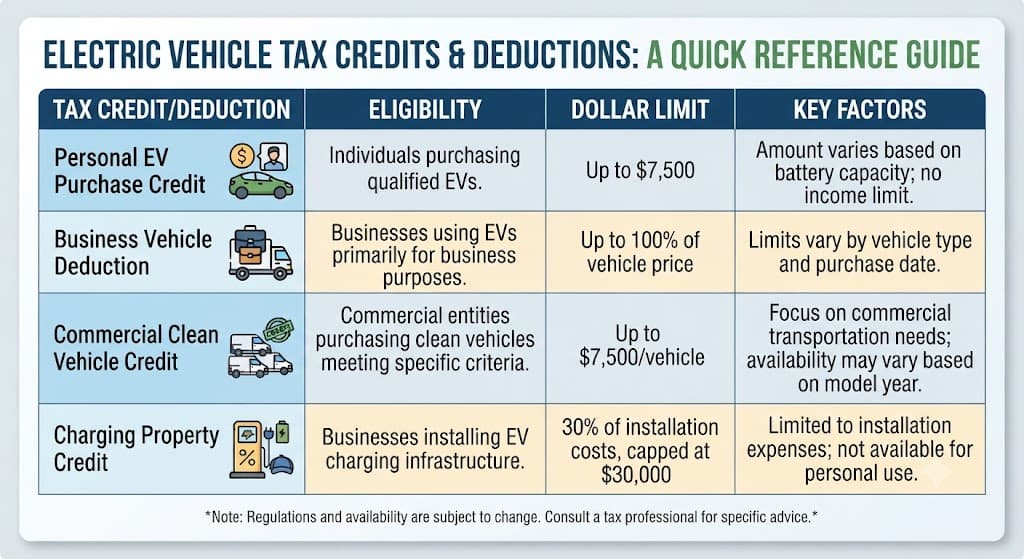
The business use of electric vehicles (EVs) comes with various expenses that can be categorized for tax deductions. Common allowable expenses typically encompass the cost of electricity for charging, maintenance, repairs, insurance, and registration fees. Business owners can also deduct costs associated with the installation of charging stations, enhancing operational efficiency.
Depreciation is particularly applicable to EVs used for business purposes, normally adhering to the Modified Accelerated Cost Recovery System (MACRS). A vehicle is deemed ‘placed-in-service’ when it is ready and accessible for its intended business use, signaling the start of depreciation deductions. For example, if a business owner purchases a new EV in June, the vehicle must be ready for business by that time to leverage depreciation in the same tax year.
The mixed use of an EV—employing it for both personal and business purposes—can complicate deduction and depreciation claims. The IRS stipulates that only the business-related percentage of expenses and depreciation may be deducted. For instance, if a vehicle is used 70% for business and 30% for personal use, only 70% of allowable expenses can be deducted, impacting overall tax benefits accordingly.
Section 179 and Vehicle Limitations
The Section 179 deduction enables business owners to write off the costs associated with qualifying vehicles, including electric vehicles (EVs), thus significantly reducing taxable income. However, as of 2026, certain limitations apply that business owners should be aware of. For electric vehicles, the maximum deduction is often capped at $25,000 if the vehicle’s gross vehicle weight rating (GVWR) exceeds 6,000 pounds. Nonetheless, for electric vans and trucks meeting specific criteria, a more generous deduction may be applicable, sometimes allowing for full expensing.
To be eligible for the Section 179 deduction, business owners must ensure that the EV is utilized more than 50% for business operations. This requirement underscores the importance of accurately tracking usage to substantiate the claimed business percentage accurately. Additionally, maintaining proper documentation of the vehicle purchase and associated expenses is crucial for compliance with IRS regulations. Keeping detailed records supports claims of business use while providing protection against potential audits by demonstrating accountability in claimed deductions.
EV Charger Property Credit as a Separate Rule
The Alternative Fuel Vehicle Refueling Property Credit is a federal tax incentive designed to facilitate the installation of refueling facilities for alternative fuel vehicles, including electric vehicles (EVs). This credit is especially relevant for the installation of EV chargers, allowing property owners to receive up to 30% of the purchase and installation cost, capped at $30,000 for business installations.
To qualify for this credit, charging stations must be "placed in service" by December 31, 2026, indicating that they must be operational by this date. Moreover, installations should meet specific criteria, particularly in commercial properties or residential units where they are either publicly accessible or exclusively intended for use with a qualified electric vehicle.
It is essential to differentiate this specific charging credit from other tax deductions related to operational costs, such as general business deductions related to running an EV charging service, which are not subject to the same stipulations. Understanding these distinctions is key to effectively maximizing financial benefits available to users.
Documents and Verification Checklist
To effectively claim credits or deductions for electric vehicles (EVs), it is vital to compile specific documents and adhere to a systematic process:
- Proof of Purchase: Retain the purchase agreement or receipt for your EV, ensuring it details the make, model, and VIN.
- IRS Form 8834: This form is crucial for claiming the Qualified Plug-in Electric Drive Motor Vehicle Credit.
- Yearly Mileage Logs: For business use, meticulously maintain mileage logs to substantiate business claims.
- Charging Station Receipts: For installation costs claimed on charging stations, preserve all relevant invoices.
- Tax Returns: Have previous tax returns on hand to reinforce your current claims.
Steps to Ensure Eligibility and Compliance:
- Verify eligibility through IRS guidelines specific to the EV credit in question.
- Systematically organize and store all documents securely.
- Seek advice from a tax professional to review your documents, ensuring compliance with record-keeping requirements. This proactive approach can help avoid errors and optimize your tax benefits related to your EV purchase.
Understanding the Complexity of EV Incentive Policies
Electric vehicle incentives are an important factor influencing consumer adoption, but their availability and requirements can vary significantly depending on location, vehicle type, income eligibility, and changing government policies. As EV markets continue to evolve, buyers and manufacturers must closely follow updates to tax credits, rebates, and other incentive programs.
Because EV incentive regulations can change over time, consumers should review the latest information from official government sources before making purchasing decisions. Factors such as vehicle eligibility, manufacturing requirements, and regional programs may affect whether a specific electric vehicle qualifies for financial benefits.
Beyond individual savings, EV incentive policies also play a broader role in shaping the automotive industry. Government support programs can influence consumer demand, encourage investment in EV manufacturing, and accelerate the development of charging infrastructure. As countries and regions continue adjusting their electrification strategies, incentives will remain an important element in determining the pace of EV adoption.
Related Posts
Luxury Electric Vehicles How Premium Automakers Are Redefining Electric Mobility

Car Phone Holders A Practical Guide to Choosing the Right Mount for Everyday Driving

How To Choose the Right Windshield Wipers for Your Car Model
Wireless Car Chargers A Practical Guide to Choosing Fast and Reliable Charging on the Road

Best Tire Inflators for Cars Portable Air Compressor Review Guide for 2026